细花含羞草
| 细花含羞草 | |
|---|---|
 |
|
| 分类学命名 | |
| 界 | 植物界 |
| 未分级 | 被子植物 |
| 未分级 | 真双子叶植物 |
| 未分级 | 蔷薇类植物 |
| 目 | 豆目 |
| 科 | 豆科 |
| 属 | 含羞草属 |
| 种 | 细花含羞草 |
| 常用命名 | |
| 异名 | 纤花含羞草 |
| 常见名称 | 朱雷玛黑、Calumbi、Tepezcohuite、Carbonal、Cabrera |
| 成分 | |
| 活性成分 | DMT |
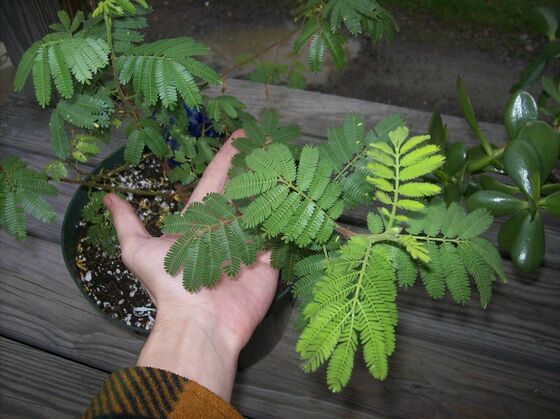
细花含羞草(也称纤花含羞草与朱雷玛)是一种原产于南美洲东北部的多年生灌木,在较低海拔地区更为常见呢。其干燥根皮中可能含有高达1.0%至1.7%的DMT。
南美洲原住民曾将其用于制作死藤水煎剂。它通常会与死藤或其他含β-咔啉类单胺氧化酶抑制剂的植物来源一同使用,尤其是MAO-A可逆性抑制剂(RIMA),例如骆驼蓬生物碱。在现代,它也常被作为提取DMT的来源,并且无论在古代还是现代语境中,都会被当作死藤水煎剂的辅料植物来使用。
尽管在细花含羞草样本中尚未检测出β-咔啉类成分,但它在单独摄入时仍表现出精神活性,这提示其机制可能并不只来自其所含的DMT。否则的话,这些DMT会被MAO-A酶迅速代谢,因而几乎不会产生作用哦(至少就其DMT含量而言是这样)。
化学
2005年,人们从其根皮样本中分离出了生物碱Yuremamine,它被认为是一个全新植物吲哚类化合物家族中的首个化合物。
图集
| 图片 | 说明 |
|---|---|
| 一幅细花含羞草的绘图 |

法律地位
在国际上,DMT根据《精神药物公约》被列为附表一药物。不过,《精神药物公约评注》也指出,含有该成分的植物本身并不受国际管制:
"The cultivation of plants from which psychotropic substances are obtained is not controlled by the Vienna Convention. . . . Neither the crown (fruit, mescal button) of the Peyote cactus nor the roots of the plant Mimosa hostilis nor Psilocybe mushrooms themselves are included in Schedule 1, but only their respective principals, mescaline, DMT, and psilocin."
外部链接
参考文献
- ↑ Rätsch, C. (2005). The encyclopedia of psychoactive plants: ethnopharmacology and its applications. Park Street Press. ISBN 9780892819782.
- ↑ Ott, J. (1994). Ayahuasca analogues: Pangæan entheogens (1st ed. ed.). Natural Products Co. ISBN 9780961423445. CS1 maint: Extra text (link)
- ↑ Vepsäläinen, J., Auriola, S., Tukiainen, M., Ropponen, N., Callaway, J. (October 2005). "Isolation and Characterization of Yuremamine, a New Phytoindole". Planta Medica. 71 (11): 1053–1057. doi:10.1055/s-2005-873131. ISSN 0032-0943.
- ↑ DMT – UN report, MAPS, 2001-03-31, archived from the original on January 21, 2012, retrieved 2012-01-14